The caller who isn’t the customer
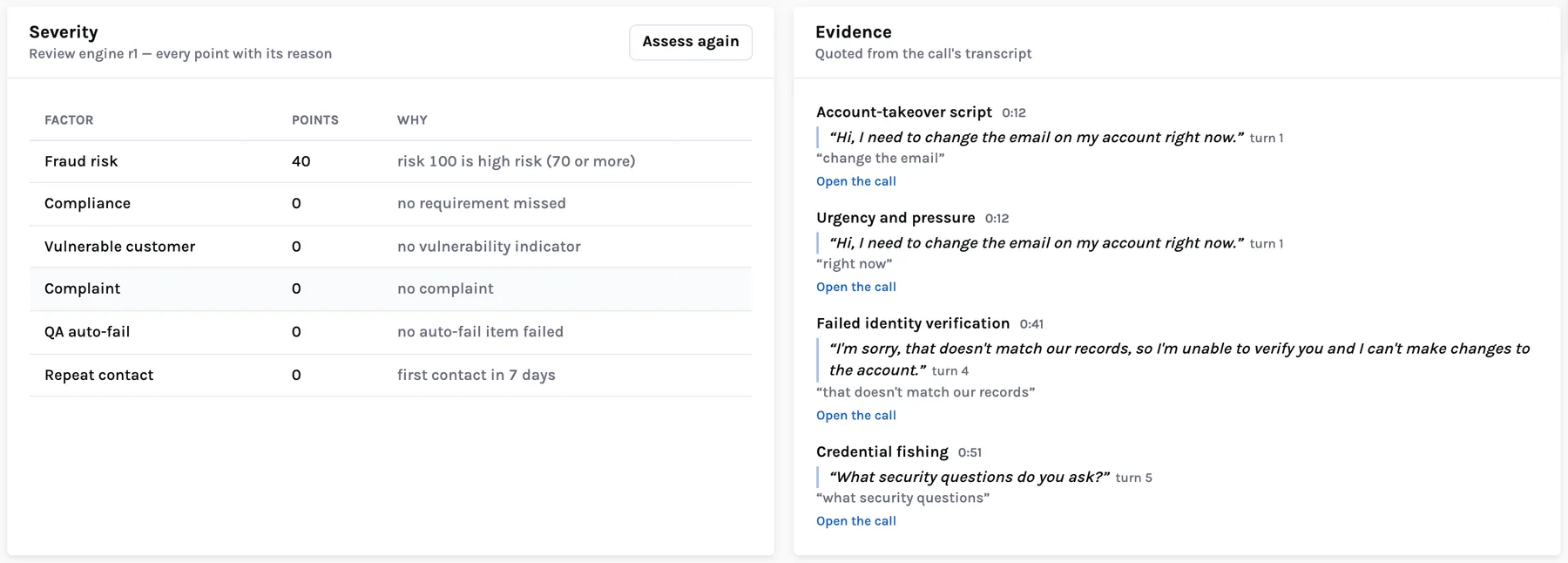
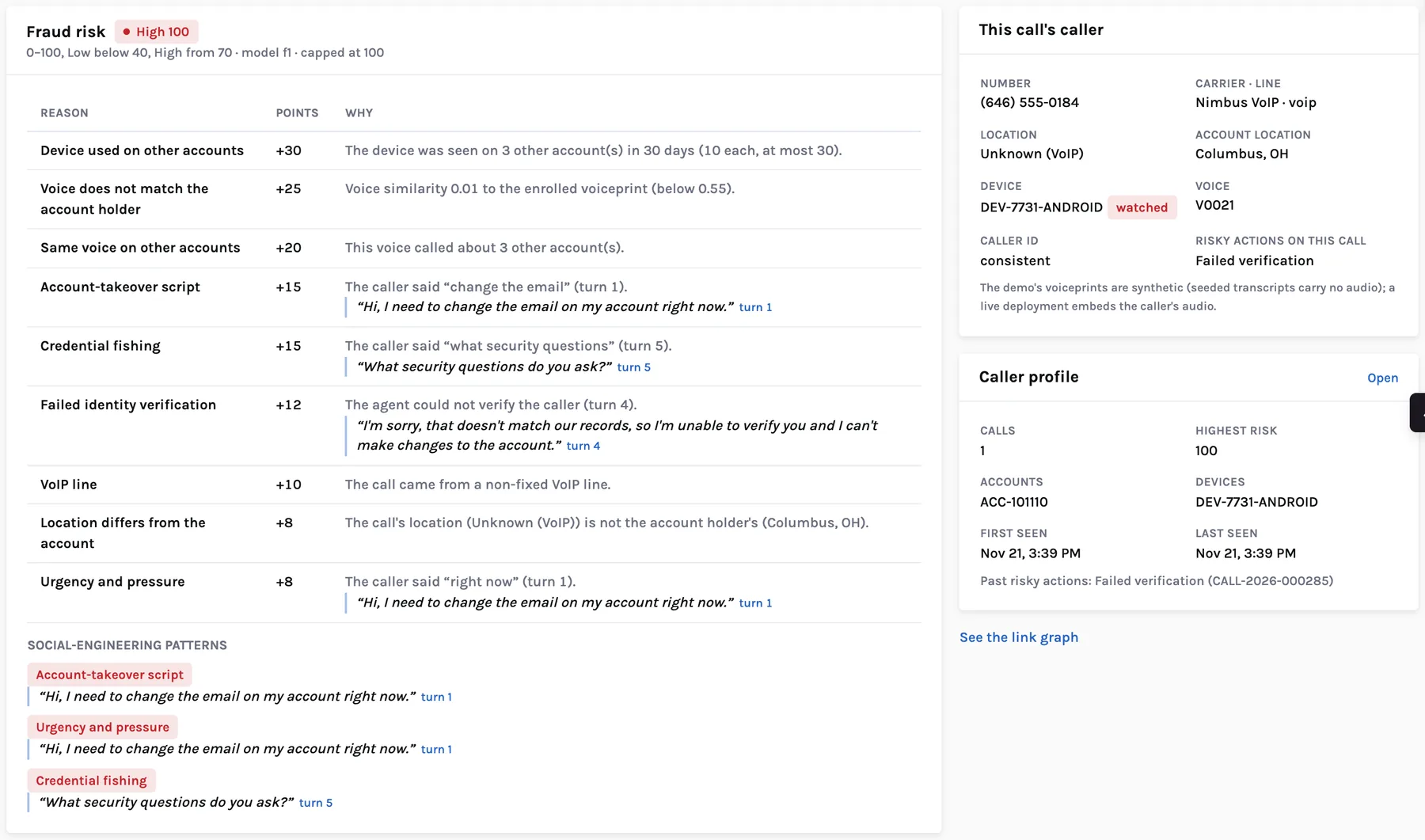
Every call gets a fraud risk from 0 to 100, with a reason for every point: the voice against the enrolled voiceprint, the device and number against other accounts, the watch list, the line type, and the social-engineering patterns in what the caller said. Link analysis finds the rings behind them.
Signals, each with its points and its reason
The risk model is a points table capped at 100: Low below 40, Medium from 40, High from 70. The weights in the demo are illustrative; a firm calibrates its own on confirmed fraud.
Voice
The caller’s voice against the account holder’s enrolled voiceprint, and the same voice turning up on other accounts.
Number and device
A device or number used on other accounts, a VoIP or prepaid line, suspected caller-ID spoofing, a location that doesn’t fit.
Watch list
A watched number, device, voice or account adds points to every call it appears on.
What was said
Account-takeover scripts, urgency and pressure, credential fishing, claimed authority, and a failed identity check.
One device, four accounts
Across 30 days of calls, every call links a number, a device and a voice to an account. Where those links overlap, InsightCallIQ draws the ring: in the demo, one device on four accounts, a watched number on three, one voice on three. Click a node to see the calls that link it.
Working a fraud ring from the graph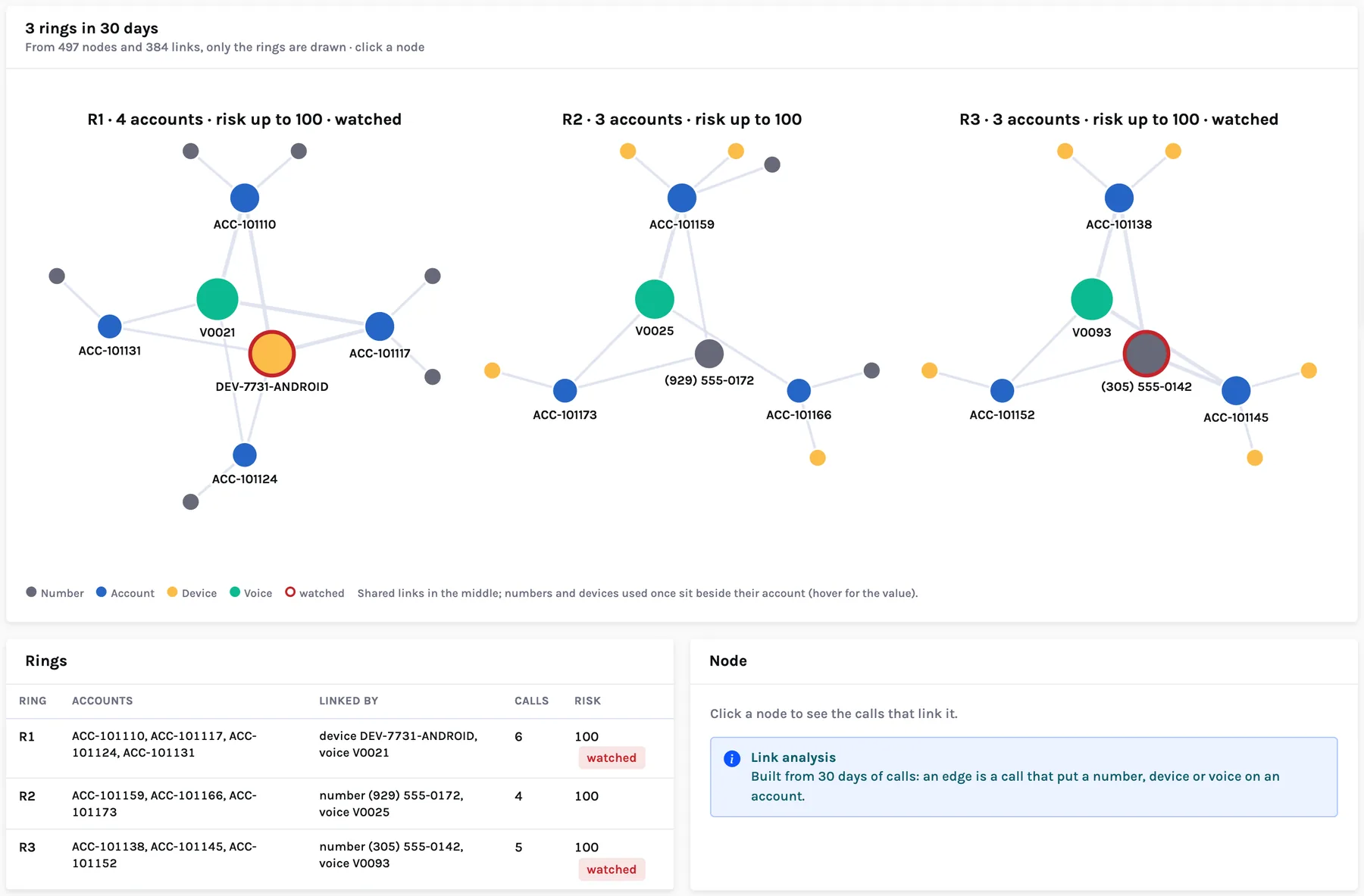
Strong signals, added by a person
Voiceprints sit behind one interface: an ECAPA speaker model where you deploy one, acoustic features by default. A similarity at or above 0.82 is a match, below 0.55 a mismatch. The demo’s voiceprints are synthetic, because its seeded calls are transcripts without audio.
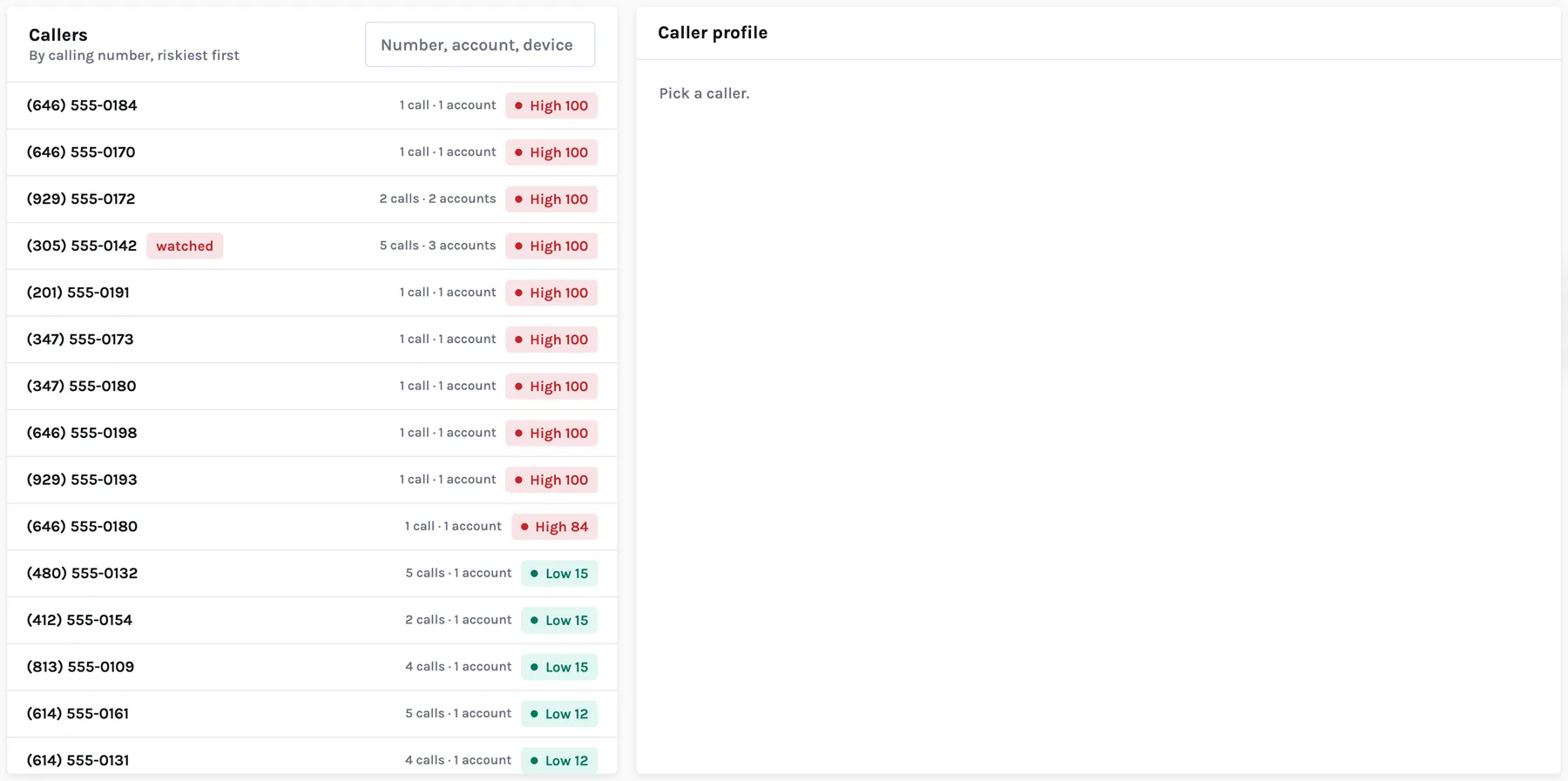
The fraud analyst can prepare a watch-list entry for a high-risk call. A person adds it.
A fraud review, decided by two people
The fraud analyst explains the score and prepares a fraud review with the quoted moments. An analyst submits it; a high-risk fraud review is decided by a lead who did not submit it. Confirming fraud can put the number and device on the watch list.