Every call, measured turn by turn
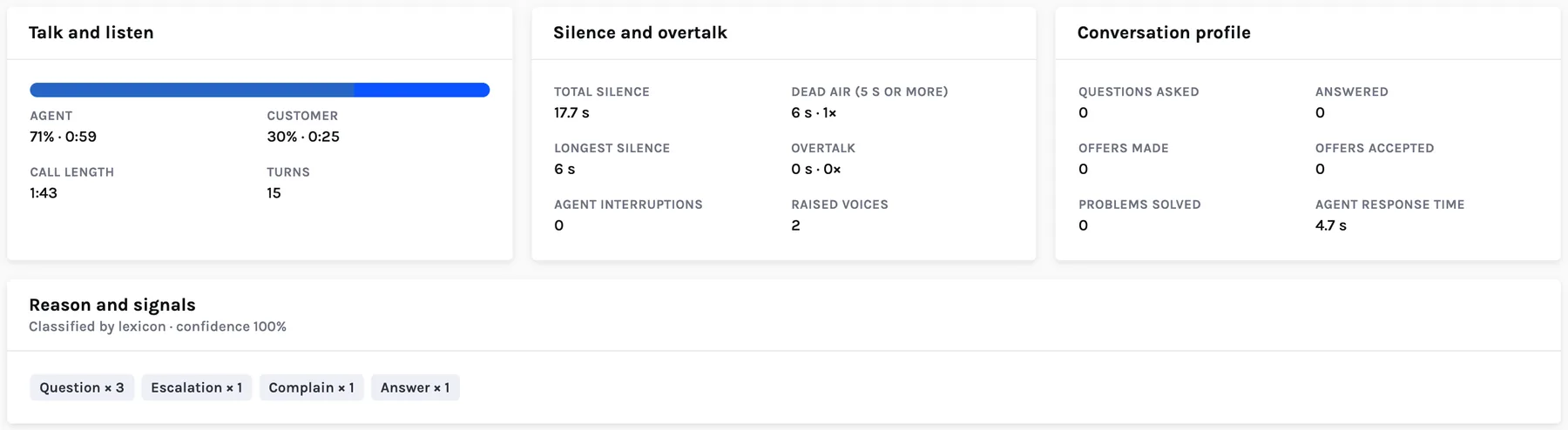
Talk and listen, silence and dead air, interruptions and overtalk, raised voices, sentiment by turn, the reason for the call and how it ended. Measured the same way on every call, and laid out on one timeline you can click.

The same measurements on every call
- Talk and listen — each side’s talk time and share of the call
- Silence and dead air — total silence, the longest gap and where it fell, and dead air: a gap of five seconds or more
- Interruptions and overtalk — who interrupted whom, how often and for how long
- Raised voices — a turn at or above the loudness threshold, marked as an escalation signal
- Conversation profile — questions asked and answered, offers made and accepted, problems solved, the agent’s response time
Why they called, how they felt, how it ended
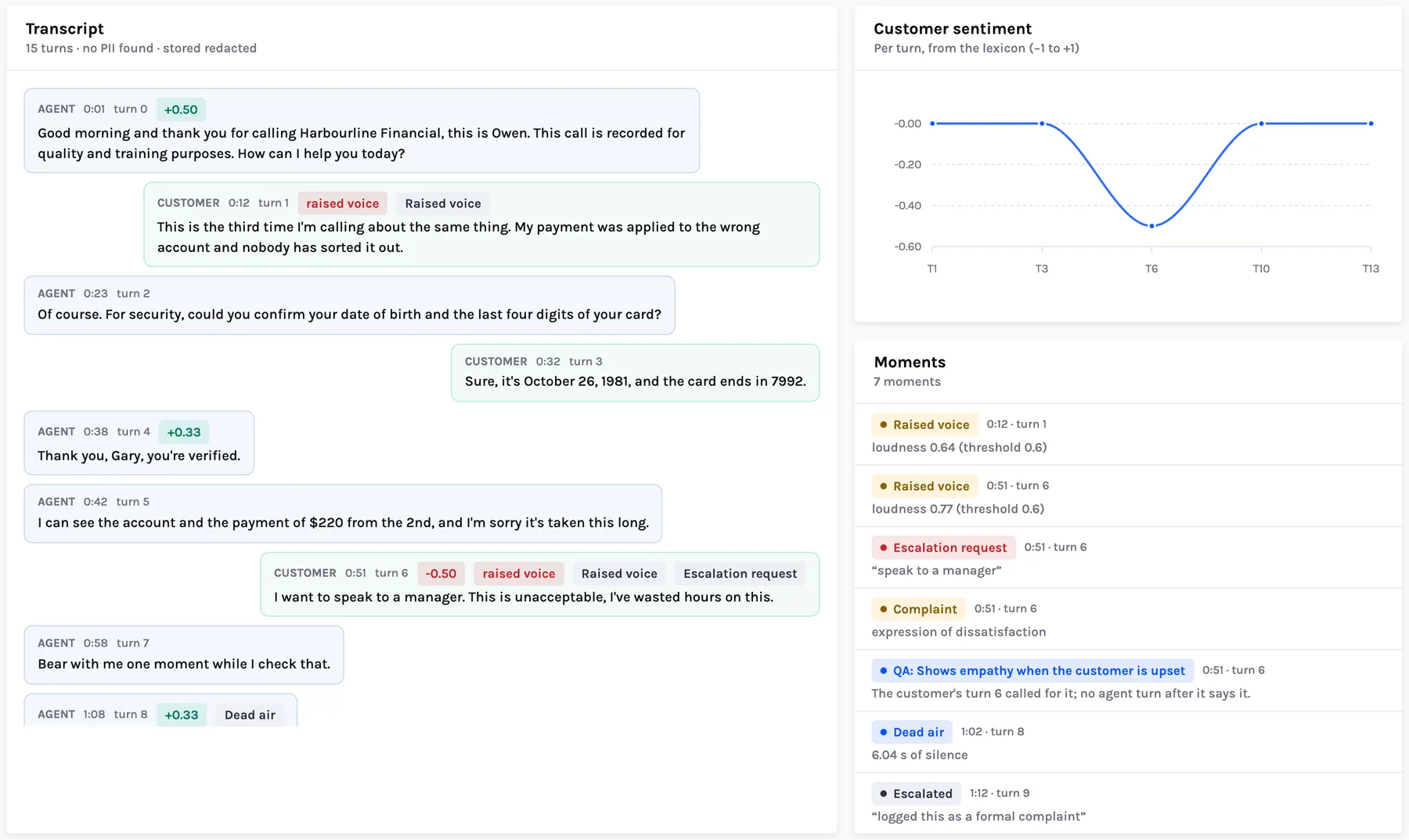
Sentiment is scored on every customer turn, from −1 to +1, so a call that started angry and ended calm looks different from one that went the other way. The call reason comes from phrase lexicons of one to six words, built for contact-centre calls, and the outcome is one of resolved, saved, escalated or cancelled.
A language model can propose a reason too, but it must quote the transcript; a proposal without a real quote is ignored and the lexicon’s reason stands.
The parts of a call worth a person’s time
Measurements become moments: a raised voice, an escalation request, a complaint, a missed QA item, a stretch of dead air, the turn where the call was escalated. Each moment links to its turn, and the same moments feed coaching, compliance and the supervisor’s alerts.
Escalation signals
Raised voices, “speak to a manager”, an expression of dissatisfaction: found on the turn, quoted, and counted for the supervisor.
Dead air and holds
Every gap is timed and placed after the turn it followed, so a long silence after “let me check that” is visible at a glance.
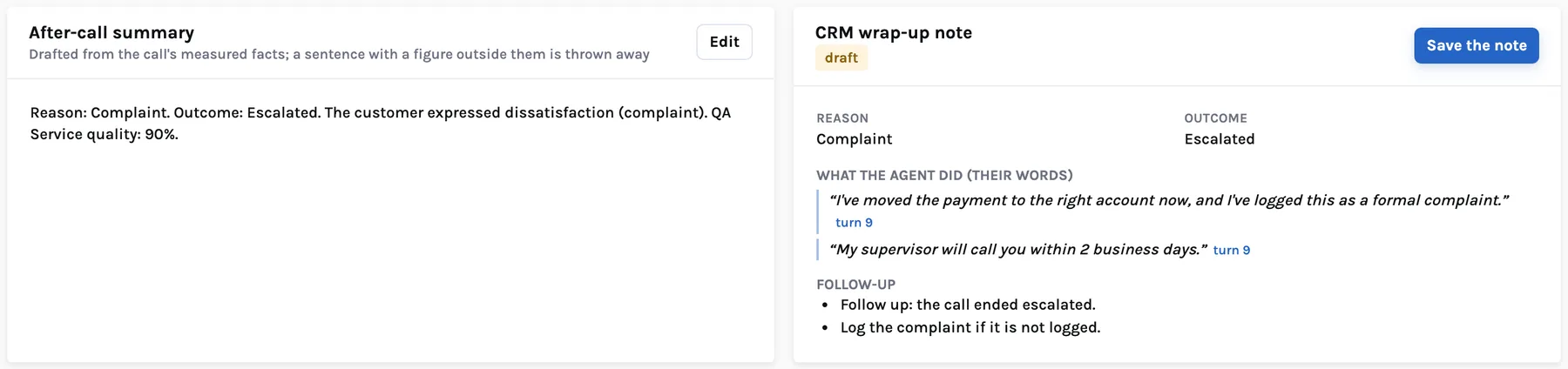
Summary and wrap-up
The call summarizer drafts the after-call summary and the CRM wrap-up note from the measured facts. A person saves it.