A person scores the same call
The calibration queue puts the scores the QA scorer asked a person about first, then auto-fails, then a random sample. A lead’s answers sit beside the engine’s, with the agreement and the criteria where they differ.
Your scorecards, with their weights and auto-fail items, run on every call that they apply to, not a sample. Each answer quotes the transcript turn it rests on, so a lead can check any score in seconds and a dispute is settled on the words, not on memory.
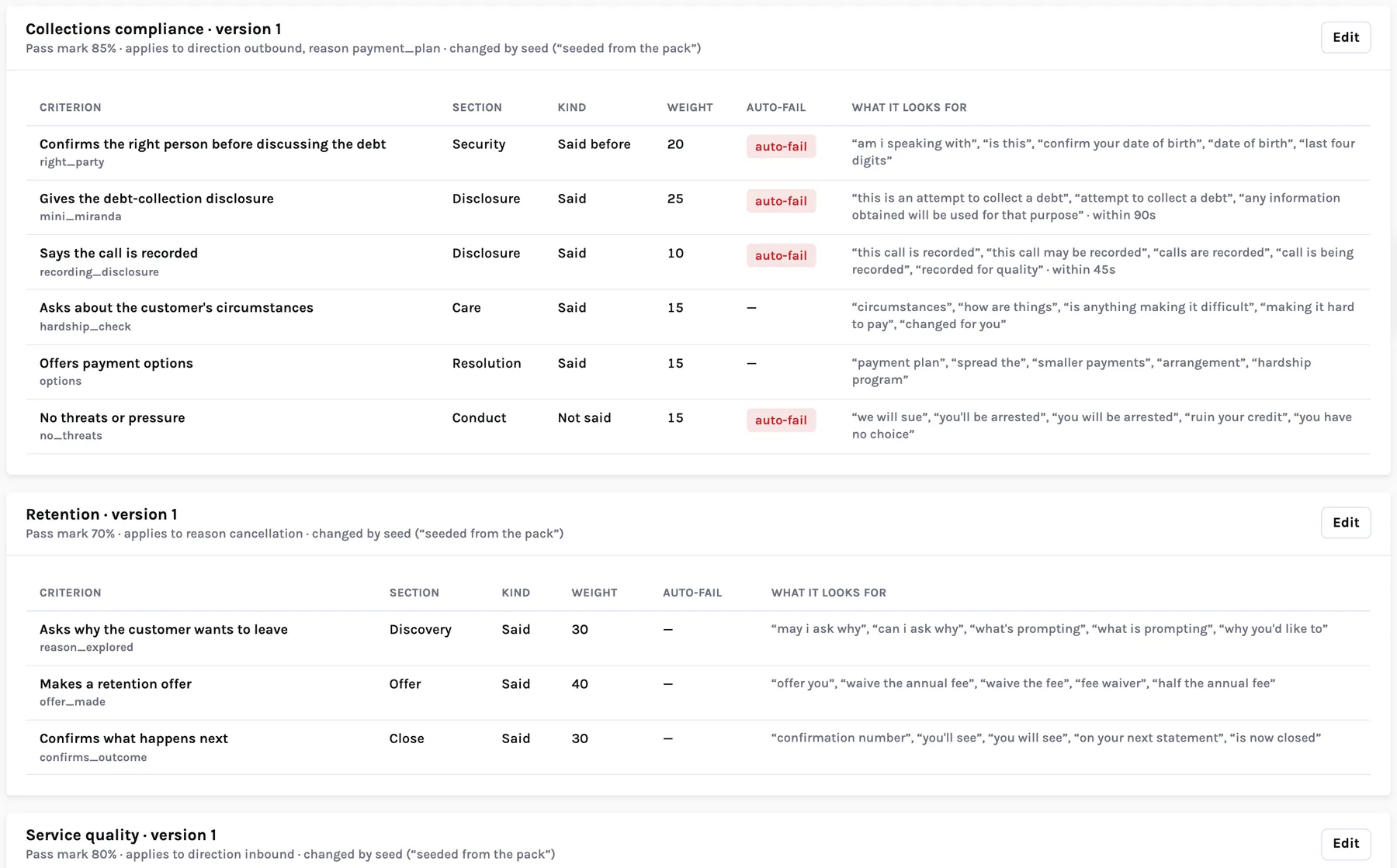
A scorecard is a list of criteria, each with a section, a weight, the words it looks for and whether missing it fails the call outright. A scorecard applies by call direction and reason: service quality for inbound calls, collections compliance for payment-plan calls, retention for cancellations.
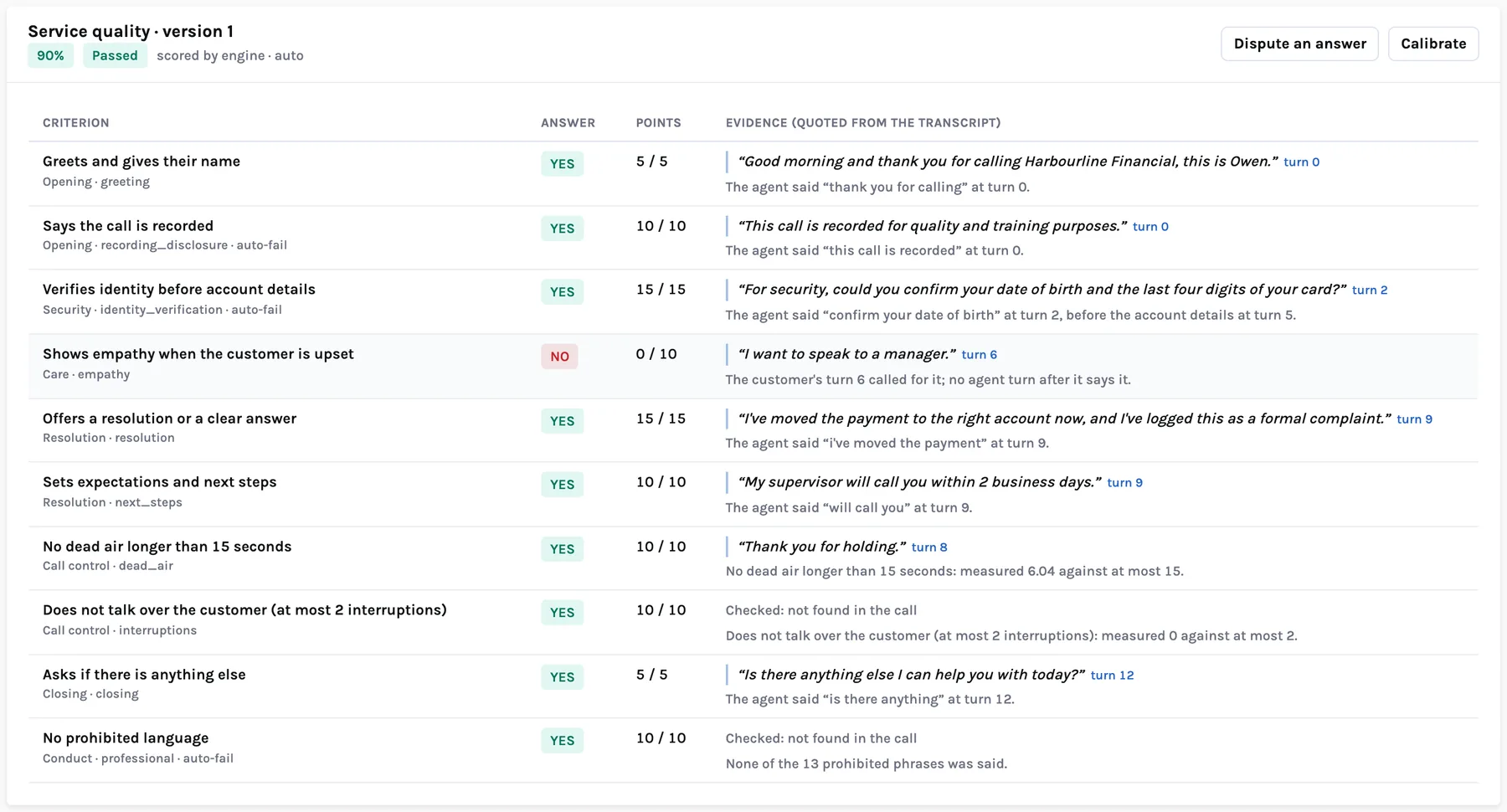
The QA scorer answers yes, no or n/a for each criterion and quotes the exact words of the turn it rests on. When a language model proposes an answer, its quote is checked against the transcript word for word; a quote that isn’t there is rejected and the scorecard’s own check stands. The QA page counts the model answers rejected, per scorecard.
Points are never the model’s: they are the scorecard’s weights.
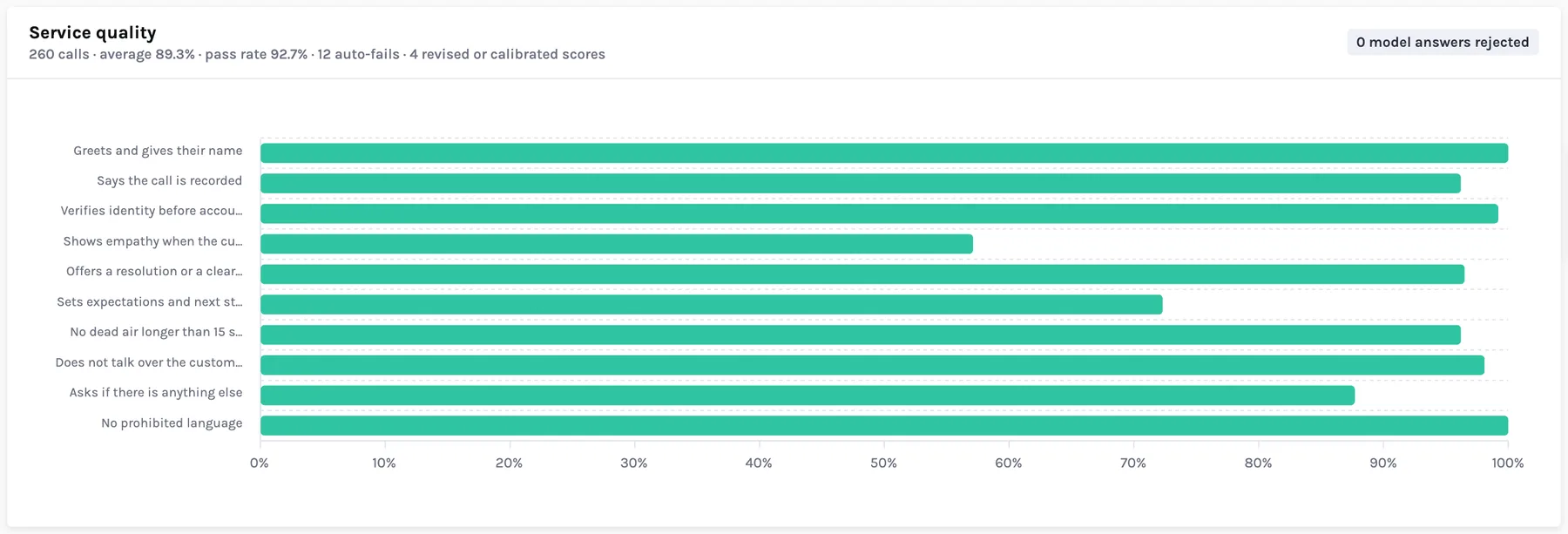
Auto-QA earns trust the way a new QA analyst does: by agreeing with your best people. InsightCallIQ keeps the comparison, and keeps a person in charge of every disagreement.
The calibration queue puts the scores the QA scorer asked a person about first, then auto-fails, then a random sample. A lead’s answers sit beside the engine’s, with the agreement and the criteria where they differ.
A dispute opens a QA review on that answer, with the quote. The person who raised it can’t decide it: a second person does, and the score is revised on the record.
When the same criterion keeps being disputed, a lead edits its phrases or weight. The new version applies from then on, and the old scores keep their version.
